|
I want to tell you a fictional story about John and why he is sometimes robbed of the pleasure of moving to-dos to done. There is a little-known reason for this feeling of being overwhelmed and immobilized.
John understands the importance of having an external dedicated spot to park ideas and tasks. With admirable effort, he is now in the habit of parking those tasks, projects, and ideas into one trusted place. He started with a planner that his friend loved using. It was a vast improvement on his previous scraps of paper sprinkled around his home. After some time, though, he grew tired of erasing and re-writing as his priorities shifted throughout the week. He wanted a faster way to prioritize and reprioritize tasks at a moment’s notice. After an initial investigation, he decided that a digital app would improve his ability to keep up with his ever-changing schedule. He limited himself to two hours of research because of his proclivity to fall down the research rabbit hole. There were so many promising options, yet he was able to settle on Asana. Fast forward six months. John now transfers all his great ideas into the app, in addition to his personal and work tasks. He sorts them by importance and urgency and immediately feels a sense of control that was previously elusive. Excellent work, John! Let’s all give him a round of applause because this is a significant accomplishment. John marvels to his friend about this new habit. He is shocked that it has become second nature to plop nagging tasks into the app. They no longer nag him nor take him off task. Although he is quite pleased with his efforts, he wonders aloud why he occasionally feels slightly cagey when looking at his lists. He diligently prioritizes all tasks by importance and urgency, which is why the feeling is baffling. In talking to his friend, he discovers the root of his anxiety. Even with prioritization, there are so many competing tasks he could be doing at any given moment, and there are clearly not enough minutes in the day to tackle them all. So, what can John do to lessen this angst and increase his sense of accomplishment by the end of the day? An entire industry revolves around productivity and reaching goals, but today, I offer John two simple tactics to avoid feeling swamped. He already understands that the holy grail of productivity lies within the “important but not urgent” quadrant of the Eisenhower Matrix. Ironically, though, a different quadrant (“not important and not urgent”) is throwing him off balance. He forgot to apply a critical step of the organizing process to his task and project lists. He used this step successfully when clearing out his garage but did not realize he could apply it to his task list. Namely, he still needs to purge extraneous tasks and projects. Even though he prioritized his massive to-do list, it still feels daunting. After connecting physical and informational clutter, he downsizes his lists by eliminating non-important-non urgent tasks. A familiar feeling of liberation arises as he ruthlessly deletes one task after another. He recalls feeling the same way when victoriously pulling his car into his garage. After vanquishing the obvious dead weight, a smattering of projects give him pause. He is unsure whether these projects will bring him closer to his larger goals. He recalls details of the garage project for any relevant tactics. Sure enough, he remembers putting a few items in a box labeled with a future discard date. This purgatorial box had allowed him to determine whether he would miss the items after a few months. With this strategy in mind, he parks the final projects in a separate section of the app where they no longer visually bombard him. He wants to label this section appropriately so it still catches his eye but is not intrusive. He remembers reading about the “Someday/Maybes” list in David Allen’s Getting Things Done. John wants something a bit more memorable. He labels this section with the hyperbolic title, “I’m either a genius or delusional!” It injects a bit of humor into the process. He knows it will bring some levity to the app. John is now happily tackling his tasks one day at a time. Most evenings, he feels satisfied seeing his completed tasks leading him to essential goals. The whole process feels lighter. It is a massive accomplishment. He shares the good news with his friend, who treats him to a celebratory dinner. Like John, I use Asana to get ideas, tasks, and projects out of my head to focus on one task. It is easier than focusing on one task while simultaneously attempting to remember other tasks. I have no affiliation with this company but have tried various apps over the years, and I find Asana to be one of the better task apps on the market. Can you imagine employing John’s tactics on your task list? Perhaps this sounds fantastic, but your task lists aimlessly wander around the home on random bits of paper. There is hope. Contact me so we can map out your game plan and make this dreamy story your reality. Whether you use a task app or a paper planner, I can attest to the liberation from deleting irrelevant tasks and ideas from your lists. Have you ever felt relief in letting go of mistake purchases? Relive that moment by deleting ideas that once seemed brilliant but have lost their luster. When in doubt, use the Someday/Maybe list. You can relax, trusting your system to hold on to that idea until you have time to revisit it. Try these tactics to move away from a to-do list and towards a to-do-to-done list.
0 Comments
 The Trap
“I’ll remember,” you tell yourself. “I’ll remember,” clients tell me when I ask them how they will remember to tackle a task they want to accomplish before our next session. “I’ll remember,” I tell myself on the rare occasions when I forget to distrust this wily statement. It’s a trap. How many times have we all told ourselves that we would remember to do something, only to chastise ourselves a few days later when we forgot to do that thing we thought we would remember? These tasks might be small annoyances but collectively add up to a cluttered home of unfinished tasks and projects. I admire clients’ positivity, enthusiasm, and confidence when they make this statement. I also wonder if they will remember amidst all the unexpected situations that inevitably pop up between sessions, not to mention other thoughts that will push that task out of commission. It is not a judgment on their abilities; The issue is that we (me included) think we will remember more than we do. Clients sometimes start an appointment with self-flagellation because they forgot to do the task they meant to accomplish between sessions. I empathetically explain that, as far as I can tell, there is nothing wrong with their memory. It is simply a case of having more to remember than our memories can handle. We then explore options to capture the task and set them up to successfully remember to do the task at the right time. Working Memory Our working memories temporarily hold information to work it. We only have four slots available at any given time. (I have more recently read of six slots. Either way, our working memories do not have an infinite capacity to hold onto competing bits of information simultaneously.) According to Dr. Russel Barkley and other experts, that number also decreases as we age. These limited slots translate to a limited capacity to remember various bits of information throughout the day. New information will squeeze out older information. As we walk to another room to retrieve something, any number of possessions in view can trigger competing thoughts so that by the time we reach the room, we have forgotten what we meant to retrieve. External Memories How can we avoid this aggravating trap? We need to transfer the task to an analog or digital external memory. Grabbing the nearest piece of paper to quickly jot down a thought is a typical example of an analog solution. We can all do our future selves huge favors by writing thoughts in a consistent place, like one brightly colored planner. This planner bypasses the all-too-common problem of losing tasks written on tiny slips of paper. Digital external memories can be rudimentary or quite robust. You can quickly ask Siri or Alexa to remind you to do something at a particular time. Alternatively, you can take a few extra seconds to open a robust task app to prioritize and schedule it against competing tasks or delegate it to family members and colleagues who use the same app. The Quicker, The Better Sometimes, the task disappears before we can open our planners and apps. Normal aging, increased stress, depression, and ADHD are a few reasons why this may occur. Whatever the cause, you can try an unusual tactic to keep that task in mind until you can record it: repeat it out loud until you have opened your planner or app to the correct section. This strategy sounds silly, but it works, especially if your phone, laptop, or planner has temporarily gone missing. Another tactic is to use a temporary stop-gap. For example, irrelevant but important tasks or ideas pop up while I work at my desk. Taking the time to transfer the ideas to a planner or app can sometimes lead to more distractions. So, I keep a small, thin dry-erase board within reach to quickly record the thought and return to work. When I need a break, I transfer the ideas and tasks to my app and clean the board. This tactic removes competing thoughts so I can stay focused. The small board size is critical; I can only write down so much information before it is full, and I need to stop, transfer it to my app, and erase it for the next batch of ideas that arise. It’s All About Context When transferring tasks and ideas, document more information than you anticipate needing. Include the current date (including the year), where you left off, the next step, and any other pertinent details. This strategy is a lesson born out of frustration. Years ago, I ran across an important note that could have been helpful, but I had neglected to write the full date and sufficient context. I organize papers and files with most clients. We frequently find cryptic notes. When this happens, they must waste time retracing or repeating steps. For this reason, I recommend transferring more context than they think they will need. One well-written note can save hours on complex projects. Hoping Vs. Committing Transferring tasks out of our heads (and, better yet, scheduling them) serves a secondary yet equally important role. It solidifies the task and represents a commitment to doing it. It can be helpful to tell loved ones, “If you don’t see me capturing it in my planner or app, I have not committed to doing it, as much as I think I have.” This concept especially rings true for those with ADHD who might enthusiastically agree to help with a task but inadvertently forget because they did not capture it outside the working memory. David Allen Says It Best David Allen, author of Getting Things Done, does a fabulous job explaining this habit’s critical nature. When he mentions “RAM" (random access memory in a computer) he is referring to your working memory. On page 23 of my earlier 2001 edition, he writes: “The big problem is that your mind keeps reminding you of things when you can’t do anything about them. It has no sense of past or future. That means that as soon as you tell yourself that you need to do something and store it in your RAM, there’s a part of you that thinks you should be doing that something all the time. Everything you’ve told yourself you ought to do, it thinks you should be doing right now. Frankly, as soon as you have two things to do stored in your RAM, you’ve generated personal failure, because you can’t do them both at the same time. This produces an all-pervasive stress factor whose source can’t be pinpointed.” The best action is to get the task out of our heads, onto paper, or into apps. Your future self will love you for it! What accomplishments would feel great to reach by year-end? How does decluttering fit into the picture? Make this the year that you reap the benefits of organized spaces so you can enjoy them!
Imagine how uplifting it will feel to sit in your organized space, marveling at your accomplishments and how they have positively impacted your life. Use all of your available senses to make it feel real. What feeling does it impart? Are there any pleasant smells wafting from the kitchen? Is there a fresh breeze from a newly opened window that smells fantastic? Are you smiling as you crack open the library book and notice that particular smell? What do you see around you? A reading corner? A crafting station? A cleared-off desk or dining room table? What displayed artwork and décor is making you smile? Perhaps a painting tucked away in the back of the closet for years is now a joy to see on the wall? Admiring your beautifully arranged crafting station whose colors elicit a smile? Maybe family members admire a unique collection that is now on display? What are you touching? The soft fabric on your newly cleared couch? The rough texture on the pages of a book you are reading? The smoothness of the electrical cords you are using in your workshop? The cool stickiness of the dough that you are kneading? Maybe the fuzziness of the yarn you are knitting into a hat? What are you feeling? The coolness of the desk’s surface on the side of your hand as you write? The slight breeze on your arm from that open window? What sounds do you hear? The Sound of Silence album you once deemed lost forever? The sound of birds singing, now that you replaced the old melodious refrigerator? The crinkly cover on that library book? The raucous sound of family and friends laughing? The literal sound of silence that your calmed mind now allows you to enjoy? What activity is happily engrossing you? Are you fearlessly knocking out important tasks left and right, now that your office area is clear? Sitting in a bright, cozy corner while you enjoy a riveting book your friend recommended? Guiltlessly watching your favorite guilty TV show as you ride your stationary bike? Eating your favorite meal at the dining room table? How does it taste? Like victory, I bet! See how the newly appointed space makes other parts of your life easier and more enjoyable? Think about how your decluttered spaces can increase free time to enjoy a new hobby or deepen essential relationships. Your increased confidence can even spill over into other areas of your life you cannot yet imagine. Make this vision as concrete as possible. Then, revisit it often so you can emotionally connect with that goal. The less abstract it feels, the better. This vision of yours can come to fruition this year! Imagine the possibilities! You might have declared, “This year will be THE year I get organized!” Excellent! There is nothing like the rush of a new year to capitalize on excitement and propel ourselves forward with incredible momentum. We will succeed!
Try something that might sound odd at first blush. Stop before you start. More explicitly, pause. Take some time to think about exactly why you want to get organized. Grab a pen and paper and write down the reason. Now, dig deeper. Then deeper again. Why? That more significant reasoning is often a more powerful motivation than our first reason. That more substantial reason is the gold that will keep you going. Here is how it might play out: John wants to organize his dining room table to serve meals there once again. He briefly examines this because he can think of ten other projects he would rather do than tame the mountainous topography on the tabletop. Each time he asks why, he uncovers a more in-depth reason. Ultimately, he realizes that clearing the table means he has space to invite his nephews to his home. They share his love of cooking. Their mutual interest will help him get to know them better before they head off to school. Clearing the dining room table becomes exponentially more meaningful to John because it will deepen his bonds with his nephews and create great memories. He discovers that starting and maintaining progress becomes painless because he is more emotionally invested than he was with his first reason. What is your why? Give this exercise a go as John did. You might be surprised to find how much energy the pause generates! If you have a half hour to dedicate to a decluttering session, you do not have thirty minutes to declutter. It sounds strange, but it makes sense once you understand an often-missed part of a decluttering session.
With a thirty-minute session, you only have approximately twenty minutes to dedicate to decluttering. You will need to allot the last ten minutes for tidying up. This can understandably feel counterintuitive. Why waste time cleaning up an area that is still in the process of being organized? After all, we will just waste more time at the beginning of the next session pulling things out again, right? Well, yes, but there are excellent reasons to dedicate sufficient time to cleaning up at the end of each session. If you can overcome the common gut-level reaction to abandon ship without tidying, you can avoid these unpleasant surprises: Lost organizing supplies: When you are already exerting admirable effort to declutter, it can be frustrating to waste time looking for Sharpies, tape, and other supplies. It also cuts down the available time for the actual decluttering. Inadvertently dismantled progress: Adorable pets can unintentionally intertwine previously sorted piles when they walk over them. This especially rings true for beloved felines, although beloved canines can get in on the action. Fellow two-legged companions can accidentally undo your work, too. They might knock over an unsecured pile as they walk through a space. Additionally, they might not realize that a pile results from your efforts and thus attempt to help by putting one pile on top of another. The paper notes that act as your crumb trails can act as the same for your companions. Additionally, containing piles can secure them for the four-legged companions who can’t read. Forgetting where you left off: It can be incredibly frustrating to remember precious free time spent on decluttering, only to waste time trying to remember where we left off. Tidying up includes leaving crumb trails for our awesome future selves who return for a second session. Our initial reaction is often, “Oh, I’ll remember what these piles are when I return tomorrow.” This harmless lie we tell ourselves causes unnecessary angst. The vast majority of us mere mortals (me included) will have to spend at least some time reorienting ourselves to exactly where we left off. This is especially true when tomorrow turns into next week or next month. Why not decrease the reorientation time? Trust me on this one and save your future self time by writing notes as to what pile is what. Bonus points for listing out the next step as well. Little, and not so little, injuries: Slippery piles of clothes and papers make excellent launching pads for falls. The last thing we need when putting in laudable effort is injury. That would not only impede progress but would also naturally make organizing seem downright dangerous. If there is ever a reason to avoid a task, there is nothing like danger to convince us to retreat. Getting discouraged: Clutter can temporarily grow as we sort it into categories. Like the incoming tide on a beach, it can temporarily expand, but it needs to recede again at the end of a session. If not, the expansion might dampen our motivation to continue. Avoiding These Pitfalls: If you tidy up at the end of each decluttering session, you will feel great about the fruits of your labor and speed up your wins at the next session. So, give session-tidying a try. Your future self will shower you with accolades. They might even amusingly say, “Thank you, Past Me, for helping Current Me save precious time! You are so thoughtful!” Bookending as a verb? Yes, and this action can ease your organizing journey. It is a well-known tactic used within the support group community of those with hoarding disorder. Traditional bookends keep books in place. In the decluttering community, declutter buddies use phone calls as “bookends” to keep decluttering sessions in place.
Two individuals pick days and times to declutter simultaneously. One individual calls the other at the beginning of the session. They briefly share what decluttering activity they intend to do. They speak again at the end of the session to report back. It is similar to body doubling I described in a previous article, but different in that each individual works alone during the allotted time. The beginning and ending calls act as “bookends” to keep the sessions in place. I have worked with many individuals already employing this tactic when we started working together. They shared that they were more likely to stick to decluttering sessions when they knew someone else was counting on them to show up. Sometimes, getting started and sticking to a decluttering routine can be the most challenging part of the work. Once we gain traction, motivation increases to continue working toward decluttering goals. The secret is out; bookending is another valuable tool to add to your organizing toolbox. Decluttering does not have to feel lonely. It is a relief to talk to peers sharing the same challenges and feels uplifting to help others with life challenges like conquering clutter.  Santa Cruz boardwalk Santa Cruz boardwalk Children are often congratulated and rewarded for their efforts. Adults also need reinforcement to continue challenging tasks in their best interest. This includes decluttering and organizing tasks.
Envision a baby learning to walk. He stands up, attempts a step, falls, and tries again. His parents cheer him on, even when he falters. This baby is determined to walk, and his parents lovingly give him positive reinforcement as he learns. Eventually, they are all quite excited when he takes those first steps. The parents do not berate him for falling; they continue to encourage him to stand up again. At some point in our lives, we stop getting excited about our steps in the right direction and instead start focusing on the falls along the way. This focus happens for many logical reasons but is counterproductive. Try a different tactic and congratulate yourself on each decluttering step. If this feels too difficult, start with rewards instead. Various authors have written about the importance of rewards in establishing habits or reaching goals. The beginning and middle of a decluttering project can feel like a big slog if we hold off on rewards until we reach the final goal. Why not increase motivation throughout the project by giving yourself rewards throughout the process? It will likely result in a dopamine hit that creates a cycle of craving to experience that reward again. When picking rewards for your efforts, ensure that they:
Here are some non-food rewards to get you started:
What activity do you generally avoid because it feels too decadent? That could be a great reward to put in rotation. Do you have any unusual or wonderfully successful rewards? Add them to the Comments section below so other readers can also give them a whirl. I am often asked, “Is this the worst you’ve seen?” when I first work with a new client. This question speaks to the stigma and shame that often accompany clutter. It also speaks to our proclivity for comparisons. What if there was a better way to get a read on the state of clutter in your home?
Fortunately, there is. I am a member of The Institute for Challenging Disorganization, which provides copious amounts of education to professional organizers working with those with individuals who struggle with chronic disorganization. CD is not a diagnosable condition. It is a way to describe individuals who have struggled with disorganization for quite some time, for whom clutter is negatively impacting their lives, and for whom self-help efforts have not worked. This challenge can result from various challenges, such as hoarding disorder, ADHD, depression, and TBIs (traumatic brain disorder). One of ICD's free resources is The ICD® Clutter–Hoarding Scale®. This scale is not a diagnostic tool, but rather a way for organizers and their clients to identify how clutter is impacting their home in five arenas:
Each category contains a scale from 1 to 5 in terms of severity:
I typically share this scale before meeting with a new client. Rather than worrying whether their home is the “worst you have ever seen,” they can see where their baseline clutter falls on the scale. It provides clarity and helps prioritize goals. Here is a fictitious example. Carl lives in San Francisco. Lately, he has been focused on a large project at work and increasing demands of his volunteer board work at a local community center. His home has gotten too cluttered for comfort, so he calls Certified Professional Organizer®, Judith Dold. They talk about his decluttering goals, the current situation, and what roadblocks have prevented him from reaching his goals. He wants to start in the kitchen counters to reduce how many evenings he orders take-out. There are other areas to work on, but this is his first priority. After setting up the first appointment, Carl peruses ICD's scale that Judith emailed. He determines that the majority of his home falls within Level I. As he reads the Structure and Zoning section, he realizes that the home falls into Level II because he has inadvertently blocked his back door with clutter. He instantly recalls that day in 1989 when the Loma Prieta earthquake struck. The floor of his home moved enough that his front door became inoperable. So, with the power knocked out, he had to quickly feel his way to the back door to get outside. He immediately decides that the first order of business with Judith will be to address the clutter in the back entry area. That project would have stayed on the backburner if he had not seen the rating scale, so he was thankful to have read the scale. In short order, Carl and Judith clear the back entry and move on to kitchen organization. I base this story on a compilation of those people have told me about having experienced that day in 1989. Thankfully large earthquakes are not an everyday occurrence, but it is nevertheless helpful to be cognizant of how clutter could impact us or emergency personnel in an emergency. The scale can also pinpoint when additional help, such as a therapist knowledgeable about clutter challenges, a team of organizers or haulers, may be needed. It also reminds us of sections of the home that may have escaped notice but we would like to address. Click here If you are curious or want more insight into clutter and its impact on the home. 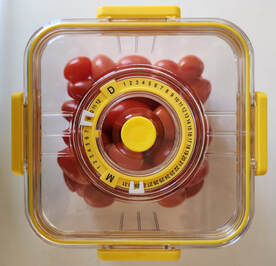 I have worked with individuals whose culinary interests range from those who love cooking to those who would rather watch paint dry. One commonality is their frustration with food waste.
Thankfully, a few doable strategies reduce food waste, lowering grocery bills. (I have added links to a few products as examples, but I do not receive a commission.) -Label, Label, Label My previous article listed condiments as refrigerators’ most easily forgotten food. They might sit for months or years before catching our eye. When they finally do, we waste precious time determining their age. I added silver and black Sharpies to my kitchen arsenal a few years ago. Immediately after opening a jar, I mark its “open” date. Since then, I have noticed less food waste. Additionally, before putting leftovers into my freezer, I use masking tape to label contents and dates. This fifteen-second task prevents freezer-burned mystery meals. Additionally, it creates easy meal variation, which is nice. Case in point: I recently noticed three frozen mason jars of chicken stock. That is one too many for my freezer, so within a few seconds, the oldest jar was defrosting in my refrigerator. As a result, I had fun working with dried, not jarred, anchos for the first time and then tasting pozole. Shopping lists save money by evading unnecessary duplicates. Labeling reduces the time needed to inventory pantry stock before creating those lists. Having to guess if a container is full of mashed potatoes or leftover cream cheese frosting might result in an overabundance of potatoes that turn mushy before being utilized. I enjoy the simplicity of masking tape, but reusable labels might save even more time. -Use airtight bins in the pantry Decanting dried goods into bins takes time. It is possible to successfully eschew them entirely. Nevertheless, these containers have various benefits. Clear bins make better use of vertical shelf space than amorphous bags of opened flour and beans, making it easier to identify multiple items simultaneously. We are likelier to check our pantries before heading to the store if ingredients are easier to spot. My incredible mother taught me how to bake. I remember delicious chocolate chip cookies, coconut cake, and banana bread, among other treats. She showed me how to level ingredients with a knife, why that was important, and how to check incoming bags of flour for tiny but not-so-delicious weevils. They hitch rides in flour bags and chew through cardboard to reach other nearby food. You can avoid costly cross-contamination by decanting into bins. I have been happy with my OXO Pop containers, but there are plenty of choices on the market. -Employ clean towels or produce bins in the refrigerator Even in clear-front crisper drawers, it is easy to forget about produce. Wrapping it in damp towels extends longevity, but produce bins work even better. A few years ago, I moved many vegetables to the front portion of my fridge so I would eat them more frequently. Clear BPA-free bins with moisture trays, date dial reminders, and airflow buttons have not only put healthy foods directly in my line of sight but also extended the life of my produce. My salad greens now last long much longer. Tomatoes do, too. They should live outside refrigerators, but my kitchen generates heat quickly, so tomatoes ripen too quickly. I was shocked that a bunch of cherry tomatoes lasted three times longer than usual when I dumped them into one of my bins. -Pay attention to crisper dials Many modern refrigerators have humidity controls for each produce drawer. You can use them to your advantage. -Stock your pantry like the grocery store Ever notice grocery store clerks rotating the oldest products to the front of shelves? It is worth the few extra seconds employing this tactic when unloading groceries. Even when canned, foods can lose nutritional value over time. Moveable kitchen shelves come in handy. There is no need for cabinet envy if you have fixed shelves; you can purchase shelf risers to double the vertical space. It will also be much easier to see what inventory is on hand. -Use the grocery store as your pantry Even better than stocking your pantry like a grocery store is to use the grocery store as your pantry. Let those companies pay the monthly square footage for food storage so you do not have to. Of course, having the basics and backups for emergencies or chaotic days is helpful, but overall, the less you have in cupboards, the less time you will spend looking for ingredients. Often, kitchen space is more valuable than having multiple backups, especially if you live in an expensive part of the country. One might argue that emergencies like the pandemic demonstrated the importance of having large food caches at home. Although emergency supplies are essential, I would make an educated guess that many American pantries still house unwanted food from the early days of the pandemic. Even during the pandemic, it took a year and a half to muscle through two cans of veggies I would not usually purchase but had bought during the uncertainty and chaos of early lockdowns. -Avoid housing pantry items in multiple places I have sung the praises of taking inventory before shopping. This task becomes too cumbersome if we must look in two different places before heading out. If we house ingredients in multiple locations, we risk finding duplicates and even triplicates long after the USDA’s recommended one to five-year mark has passed. -Do not shop when hungry or tired I thoroughly enjoy trying limited edition or less commonly seen snack foods at local grocery stores. The bag of lychee-flavored potato chips was fun. So were the banana bread Pop-Tarts, although I would rather have the real deal. My recent purchase of rose-flavored biscuits was a bust, but I blame that one on faulty advertising. I recently ran across Lays Spicy Crab flavor and Beef Wellington-flavor potato chips. It was one of my more amusing culinary adventures because a man in the checkout line asked incredulously, “Are those Beef Wellington flavored chips? I know what I’m getting next time!” What followed was a short but enjoyable conversation about this complicated dish. I have never tried it, but he had successfully cooked it and sang its praises. All this to say, I have to be careful with these little flavor adventures because the bill and the calories can add up quickly. So, I try to avoid certain grocery store aisles when I’m tired or hungry. This commonly known wisdom is a great rule to go by. -Conclusion Which of these tactics do you already employ? Which will help you to save time and money each week? What other tactics have you used to avoid food waste and reduce your monthly grocery bill? You may have read my previous article and determined that selling your discards is worth the time and effort. Additionally, after reading my second article in the series, you know which app(s) or website(s) you will use. Now for the fun part of cashing in! While the steps listed below are app-agnostic, they are valuable guidelines for selling.
Determine the Price:
Prep the Item:
Take Photos:
Prepare the Post Description:
Create the Post: Sign up for an account on the platform you will be using. Note if you need a follow-up step to verify your account, such as an email confirmation. Then, create the post. This typically entails:
Frequently Check for Responses: The sooner you respond, the more likely you will capitalize on potential buyers’ motivation. You might receive an onslaught of responses or crickets. That is part of the fun; we assume we know the market but never truly know what will be popular. If you enter the experience with the expectation that people will flake, the back and forth will be more enjoyable. You can also specify how long you will wait before moving to the next responder. If someone takes too long, move on to the next responder so that other responders stay interested. Base your timing on how long your post will be active. More buyers drop off than they did years ago. I no longer wait as long as I used to because of this. Safely Arrange a Time and Place to Meet: Communicate precisely where and when to meet the buyer. A well-lit, busy parking lot or police station is a safe option. If a responder’s communication sounds off, skip them and move to the next person. Spammers and scammers go fishing on these sites, so use your Spidey senses. Always make sure that you are selling safely. Assign a Deadline: Only post if you are willing to give yourself a deadline by which you will immediately donate the item. I have worked with many individuals whose posts expired, and the unwanted object continued to waste valuable real estate over weeks and months. A pile full of unsold clutter can be a mood killer. It is hard to admit that we cannot recoup costs on some of our purchases, but it feels liberating to donate unsold items and free up space. Taxes: Were you surprised by this one? Cash and selling apps are now required to report sales that hit certain monetary thresholds. Uncle Sam might come knocking, so familiarize yourself with new laws that have gone into effect. This article explains the basics. Conclusion: Some details vary by platform, but following these steps will make your selling process more enjoyable. So go out and have fun selling your castoffs! Please feel free to share your enjoyable experiences in the comment section below. I know I have had plenty of them over the years. Some readers are already familiar with body doubling and its outsized effect on decluttering. Others may ask, “What in the world is a body double? Is it like a stunt double?”
I was in the latter camp when I opened my organizing business in 2015. How could the simple act of quietly sitting in a room and reading a book or playing on one’s phone help another person tackle an arduous task more easily? The concept seemed too magical to be true. Yet, time and again, I have witnessed this tactic’s quiet effectiveness. Body doubling is a strategy that you can employ to gain traction on tasks. It is most beneficial for onerous jobs that feel as if they take Herculean strength to start. It could be decluttering and organizing, bill paying, laundry, cleaning, you name it. How it Works Instead of white knuckling it through an arduous task, ask a friend or loved one to body double for you. They will bring a book, magazine, or something to keep them quietly occupied during the scheduled date and time. Believe it or not, your focus on that onerous task will increase, and it might even become effortless. Your guest does not need to say anything at all. Their presence alone reminds you to continue working on your specified task. You can also use this strategy via video or phone. Body-Doubling in the Field Clients frequently remark how much they get done when I work with them. Access to my guidance and organizing knowledge are significant pieces of the puzzle, but body doubling is often in effect as well. I might be working on an entirely different organizing task than a client, but as long as I am there, they more easily focus on their own organizing task. This effect happens during virtual organizing sessions as well. From my office, I might research a product or potential price range for one of their discards. Simultaneously, from their home, they sort items into categories. They stay on task even without my prompting because of the body-doubling effect. Many professional organizers and coaches in the ADHD community have used the body doubling technique for many years. I have recommended a few body doubling companies to clients so they can more easily declutter between our sessions. This practice saves them money and, more importantly, gives them a chance to practice their newly learned skills. They can continue using the skills long after we complete the organizing project. The tactic is successful enough to have gained increasing mainstream media exposure. Give it a Go The next time you find yourself procrastinating on that much-dreaded task, contact a friend or loved one. Ask them to body double with you for your most demanding jobs, such as filing papers, paying bills, purging extraneous objects, or paying taxes. I would guess that they have dreaded tasks of their own. You can body double with each other and share the joy and satisfaction of hitting those targets together! You have passed the first gauntlet of selling your cast-offs by answering questions in my previous article. Congratulations! Now, on to the second one: deciding where to post items for maximum effectiveness and minimum effort. It is ultimately a personal decision based on various factors, but below are some of my go-to’s, along with those I tend to avoid. (I receive no benefit from any of these recommendations.)
The Platforms I Use Most Frequently Craigslist.org: Yes, this website still exists! I love its simplicity and clarity. It just works. Plus, the owners have avoided the ever-present “upgrades” that many companies roll out ad nauseam. At one point, it had such a loyal following that it became the subject of a documentary about its users and their experiences. There are other prominent players in this space now, but I return to Craigslist because of its ease of use and popularity. Sign-up is a breeze. With an email and password, you can immediately start your first post. The “Post” button guides you through the seamless process, advancing you from one part of the post to the next until you have completed your ad. CL will then email you a confirmation link to click. Once you have done that, the ad goes live. CL will then send a second email containing the web address for the public post and your personal link to edit or delete the posting. It will automatically delete the ad after a specified period. Timing varies depending on the city in which you live. You can quickly repost the advertisement after it expires by logging back into your account. Most categories of ads are free. Some classes necessitate fees, such as Jobs and Cars. I have had a great time over the years, meeting individuals and connecting over the items I sell. This includes my latest sale of a camp set up for a memorable camping trip. The buyer found my pack list and gear invaluable, and I made a tidy sum in the process. Plus, I had the pleasure of knowing someone was making great use of the gear and the pack list that resulted from years of research and experience. It was a win-win, thanks to the site. CL now also has an app. Since I prefer to post on a larger screen, I cannot speak to its ease of use, but you might give it a go. (Note that the link above takes you directly to the San Francisco Bay Area site. On the right side of the page, you can use the “US Cities” list to find the one closest to you.) Facebook Marketplace: This one is relatively easy to use if you already have a Facebook account. The interface makes it simple, with all the components on the left side of the page. You also benefit from showing your ad to the built-in Facebook audience. You can also opt to hide the ad from your Facebook friends if that is preferred. Marketplace is typically my backup to an initial craigslist ad. I have found that the “flake factor” is higher here than on CL, although that factor has exponentially increased across all platforms in recent years. Nextdoor.com: This company is a few decades newer than craigslist and Facebook. The process is clunkier and slower than craigslist, but that could be because I have thus far refused to download their app onto my phone. (The website states that load time is faster in the app.) It would be on par with Marketplace if load times were faster. I choose my platform based on which demographic will most likely purchase my item. Sometimes Nextdoor wins. eBay: I have used this website a few times. I sold a few items on the site, but only using the local option. I want to avoid the added complexity of determining shipping and going to a post office or UPS. There is an option to sell locally, but I found other platforms much easier for local sales. Posting to Multiple Sites I typically post on two platforms. Since I already spent time creating a description and taking photos, I might as well spend a few more minutes posting on other platforms. I am quite comfortable with the involved technology, so posting is fast. This is not the case for many others who become quickly overwhelmed while creating and managing multiple posts. Other Options There are a plethora of phone-based apps that have cropped up over the years, such as OfferUp. I have tried a few but found the process more time-consuming due to the small screen real estate of the cell phone. Additionally, I did not get good returns on my time, but I know others who have successfully used these apps. Some clients have enjoyed using consignment sites such as ThredUp for clothing and websites such as Poshmark and TheRealReal for upscale items. They do most of the leg work, and you reward their efforts by splitting your profits. Start with whichever sounds most convenient. If you are already on Facebook, you can give Marketplace a go. If you prefer cell phones over laptops, try a phone-based app. If you are unsure, go with craigslist. Next up, learn what it takes to post to most platforms. You will be on your way to pocketing some cash and meeting neighbors while you are at it. 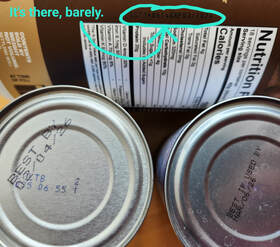 Years ago, one of my most humorous friends and I discussed food when the conversation turned to expiration dates. I do not recall what I said, but I clearly remember his response: “Judith, didn’t you know that expiration dates are for rich people?” His wit amused me as always, but I was also shocked by the concept that expiration dates could be at least somewhat irrelevant.
I have witnessed the food expiration debate play out in more pantries than I can count. Some individuals discard all food as soon as the expiration date passes. I have also found canned goods that predate the birth of expiration dates and whose contents rattled when moved. Most clients fall somewhere in between. I err on the side of caution when making recommendations to clients, especially those who lack a strong sense of smell, vision, and taste or those who are immune compromised. Expiration Dates in the News This past week, the Wall Street Journal published an article about expiration dates. It is behind a paywall, so a brief synopsis and my impressions are below. The author, Josh Zumbrun, explains the birth of expiration dates and how the public has misunderstood their purpose. He writes, “The dates originated as a coded system for manufacturers to communicate to retailers when to rotate stock. Consumers clamored for information on the freshness of food, and in the 1970s and 1980s consumer-facing dates became widespread, though never standardized. Food manufacturers have tried, largely in vain, to explain that these are mostly general indicators of when food is at its peak quality. Most foods, properly stored, remain edible and safe long after their peak.” He goes on to explain how much food the US wastes. Expiration dates share some of the blame. The United Kingdom reduced food waste by altering its dating system entirely. The US seems to be catching up: “Since 2017, FMI” (Food Industry Association) “has encouraged members to coalesce around just two labels: “Best if used by,” which indicates the product might not taste quite as good after that date but is still safe, and “Use by” for those cases where the food might actually be unsafe, such as meat from the deli counter.” One expert suggests keeping refrigerators no higher than thirty-seven degrees. To this, I add learning where the coldest parts of your refrigerator are and planning accordingly. After an unfortunate mishap with an unlucky can of Diet Dr. Pepper, I can attest that soda cans do indeed violently rip open when left in the back of the refrigerator. Their icy contents burst in every direction, resulting in a Tarantino-esque mess that is an absolute joy to clean up. Take it from me, it is an event to avoid. Canned Goods and Non-Perishables Do Not Last Forever The USDA shares significant data regarding shelf-stable foods and canned goods. The section under “Will commercially canned foods last forever?” is particularly informative, as well as the “Shelf Stable Food Chart” towards the bottom of the page. Did you know that acidic foods will eventually leach into the container, affecting taste and lowering nutrition? Acidic canned goods last twelve to eighteen months, and low-acid foods last two to five years. Storing Canned Goods Toss cans that are rusty or exposed to temperatures above one hundred degrees. It is best to avoid storing food in non-climate-controlled areas of the home, such as garages. When working in kitchens, I inform clients of the hidden danger of storing food (even canned goods) in the same area as household cleansers. The chemicals can leach out over time, even if they do not leak. Botulism: Not Quite the Bargain We Hoped For My mother taught me that although dented cans sold at a reduced price seem like a good deal, they might not be the bargain we hoped for. Large dents, especially near the top or bottom, can compromise the seal. The same goes for rusty or bulging cans. Botulism thrives in anaerobic environments. Although rare, it can result in paralysis, so I would much rather waste a few dollars than my health. Toss a can if anything spurts out when opening it. Detecting Spoiled Food Certain foods like nuts and flour contain oils and fats that can become rancid over time. Sometimes, the off-smell is subtle, but once identified, it becomes easier to detect again in the future. I keep eggs past expiration since I eat them slowly. I have been using the egg water test to ensure that more “mature” eggs are still safe to consume. How to Avoid Food Waste The best way to avoid food waste is not necessarily to keep food around longer, but to staunch the flow on the front end. That is, curb the habit of purchasing unnecessary duplicates. Most of the food waste that I see results from duplicates long forgotten in backup locations outside the primary pantry and refrigerator. With these recommendations, you have enough knowledge to start tackling your pantries and refrigerators. You might start with condiments of questionable age that typically sit forlorn in refrigerator doors for far too long because it is so easy to forget them. If your sense of smell is lacking, enlist a friend or loved one whose sense of smell rivals that of a bloodhound. You will be amazed how much easier it is to find what you need when questionable food no longer gobbles up precious space in pantries and refrigerators. You did a great job of whittling down your unwanted items. Well done! Let us imagine you have a few cast-offs that are not auction-worthy but you think you could sell online. How do you determine whether it is worth the effort? Here are some questions to help you gain clarity.
Can I Do This Safely? Are you willing to take the recommended safety precautions when selling to strangers? Nothing is more valuable than your safety. If you cannot sell safely, please do not entertain the idea. If you have a plan and have read literature regarding safe selling procedures, advance to the next question. Am I Comfortable with Technology? This is an important question. I find the online process easy enough to occasionally sell some of my cast-offs. Since the early days of Craigslist, I have enjoyed meeting buyers, hearing their stories, and making easy spending money. I am also comfortable with technology. Otherwise, I would find the process too frustrating to be worthwhile. I have worked with many individuals selling for the first time, only to discover that the process is overwhelming and time-consuming, even with my help. So, your first order of business is to decide whether you are comfortable enough with technology to give it a shot. If so, excellent, proceed to the next question. Do I Have the Time? What type of demands do you have on your time? Do you care for children or grandchildren? Do you have a household to manage, including home repair? Do you have hobbies that take up most of your free time? Selling will likely take much longer than anticipated the first few times you post. We must also factor in time for back and forth with potential buyers. This used to be a cut-and-dry process, but I have noticed that the “flake factor” has exponentially increased in the last few years. You have to allow time for multiple rounds of communication with various individuals. To be safe, also allow extra padding for those who suddenly drop off contact. This new dynamic means that I am now more picky about what I take time to post. I donate 99.9% of items I tire of or swap out to make space for a new purchase. Honestly weigh selling projects against other goals and deliverables in your life. Then, you can avoid feeling bad about spending time on a process that might not get the expected results. You will also feel better when an item sells. Am I Willing To Repost if Needed? Sometimes, items are quite popular, particularly if sold at the right time. I recently sold an entire camp set-up because I knew when to post for maximum exposure. I was able to sell it to someone attending a unique event for the first time. I enjoyed sharing my knowledge, explaining why each item was helpful, and sending my multi-page Excel document that I had updated after each year of attendance. Often, though, the process takes longer. Sometimes, I am unsure whether an item has a viable market, and it takes additional time to repost ads. Am I Willing to Stick to a Deadline? I have sold many of my cast-offs over the years. I have also been unsuccessful in selling other items over the years. I need to stick with a game plan to make sure the process is short. If the item does not sell after a specified time, I donate, recycle, or trash it as needed. If you think you will be tempted to keep the item indefinitely, you are better off donating it immediately. Things that languish in corners can zap the motivation needed to continue decluttering. Is There a Market for My Item? A common refrain from professional organizers is that “no one values our stuff as much as we do.” It is a great rule to live by. There will be exceptions, but our confidence can lead us astray. We might look on ebay.com and think, “Awesome! This camera is selling for $300!” The key is to filter the results by “Sold.” We might find multiple posts asking $300 but only selling for $5 to $10. Conversely, we might be pleasantly surprised to find that others have sold their items recently for a tidy sum. Did you answer a resounding “Yes!” to the questions above? If so, congratulations; you are now ready to sell your item and will hopefully enjoy the process as I have over the years. Stay tuned; next up, I will demonstrate how to sell your items online! There are so many organizing myths and misconceptions that limiting my list to ten was difficult. Nevertheless, below are some of the most common and damaging to one’s journey from chaos to calm that comes from organization.
1. If it is worth doing at all, it is worth doing perfectly. Perfection is sneaky. It can appear in subtle yet impactful ways. Sometimes, we struggle to differentiate between a job well done and perseveration. It commonly lurks about when we are finding “homes” for discards, creating organizational systems, or diverting items from landfills. (It is great to be “green,” but not at the expense of the ability to use space as needed on a daily basis.) The more you catch it attempting to wriggle its way into your process, the better chance you have of organizing in a more realistic and thus relaxing way. 2. I have finished once it is magazine-worthy. This one goes hand in glove with Myth #1. Magazines display “normal” homes. The photo for this “normal” home probably involved a team of professionals who worked full days to get the right shot. Additionally, it can take thousands of dollars to recreate drool-worthy pantries filled with matching organizing products and decanted dry goods. This is not to say that one’s organized space cannot look polished, but it is tremendously helpful to be realistic with expectations. We will lose if we measure our homes against a team of professional designers. If this resonates, try a magazine and social-media diet. When you finish an organizing session, tell yourself, “Good enough is good enough,” celebrate your progress, and reward your efforts. Eventually, you will have a home with workable, calm spaces. 3. I need a bigger home or a storage unit. One could rent a storage unit or move (and in some cases, like a growing family, might need to). That could be true for some individuals, but most people I meet are not hoping to move or pay monthly storage fees. They simply want to live a more relaxed daily life. Thankfully, the organizing process typically creates enough space that one does not need to move or rent outside storage units. 4. This is going to take forever! The start of the organizing process can feel overwhelming and like it will take forever. Thankfully, there are a finite amount of items in any given home. You will see progress as you start to clear out drawers and shelves. Then, you will see light at the end of the tunnel. 5. I know myself: I will only finish if I do it all at once. When the mood strikes, one’s natural inclination might be to conduct a whirlwind decluttering session. Behind the scenes, the individual might unconsciously wait until dopamine levels are high enough to light fires. These embers of motivation can be stoked by the thought of guests arriving in a week or receiving an audit letter from the IRS. Magically, it seems they have all the energy in the world to tackle the clutter. The issue with this strategy is that it leaves one exhausted. The next time they need to declutter, they remember that marathon session and think, “No way!” Instead, this individual can focus on doing fifteen minutes of daily decluttering. In this manner, they will maintain stamina, and the work will become easier as it becomes habituated. 6. I need new bins to stay organized. It is logical to think new bins and containers solve our organizing woes. Advertising, TV shows, and media bombard us with images of beautiful new containers in decluttered homes. The truth is that bins and containers are a piece of the puzzle, but only one part. Brand-new bins and containers are not usually the answer to clutter. In fact, they can add to the chaos. Once we discard unwanted items, we know which type of container or bin will work best for the remaining items. As we empty existing bins and containers, we can repurpose them and save money. 7. I need to dismantle everything and start over fresh. Sometimes, it feels like everything needs to be fixed because of the clutter. Fortunately, parts of spaces or organizing systems are typically working well. They might only need slight modifications to work as intended. As you declutter, look for those winning systems and leave them intact. 8. It is hopeless because I have read organizing books, and I am still disorganized. Organizing books are great. They introduce us to helpful concepts and strategies. It is important to note that not every strategy will work for every person. If you have ADHD, many organizing books might not help because they are written for neurotypicals. You might be better off with Ari Tuckman’s More Attention, Less Deficit or Judith Kolberg’s ADD-Friendly Ways to Organize Your Life. (Click here for information on both books.) Sometimes, a home-grown, customized approach is needed. You might weave together various strategies to discover what works for the way your brain works. 9. It is hopeless because my space has been messy for years. I am commonly the first individual a client has had in their home for years. It is absolutely possible if you are willing to learn, challenge assumptions, and practice. You might need individual or team support, but you can succeed. Organizing is a soft skill that is not always explicitly taught. Additionally, challenges such as undiagnosed ADHD, depression, or anxiety can wreak havoc on the process before they are addressed. Many clients deal with one, two, or all three of these challenges. If there is support for symptom management, the organizing process is much more manageable than otherwise. 10. It is hopeless because I am still disorganized despite my friends' and family’s efforts. Friends and family members are typically the first line of defense against the battle with clutter. Commonly, this team can do wonders. Other times, friends and family are well-intentioned but lack the skills to understand roadblocks and strategies to move around them. They might have excellent organizing strategies that work for their spaces, but everyone’s brain works differently. This could mean that their loved one needs a different system. Hopefully, dispelling these myths leaves you feeling more energized and ready to tackle clutter. You can reach your decluttering goals with time, effort, and practice! 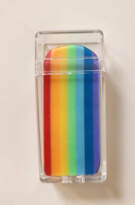 We Love Our Collections
Why do we hold collections so near and dear to our hearts? Maybe Gestalt is at play: “The whole is greater than the sum of its parts.” One or two photographs might be beautiful, but an entire exhibit can create an awe-inspiring experience. This may explain why breaking up our collections feels difficult, even blasphemous, as we attempt to clear space for more essential items. It makes sense to keep the collection together in the case of Picassos or rare cars. More typically, individuals I work with have collections such as Hummel figurines, National Geographic, stuffed animals, books, records and cassette tapes, Beanie Babies, etc. Most of the value is in the emotions they elicit, not the dollars they command. I am Not Immune to the Collection Bug I have had my collections over the years. I believe it started with a sticker collection when I was a young girl, but I also had groups of stationary, stuffed animals, colorful pens and pencils, and erasers that I periodically pulled out to admire or display. I also had a collection of Life Magazines. I enjoyed looking at all the fantastic photographs, and I was not immune to that perilous thought, “These will be worth something someday!” They sat well preserved in the dark recess of my closet for many years before I realized they were a dime a dozen. Additionally, I had kept them in good condition, but they were not pristine. Even if they had been, I probably would have had to live to the ripe old age of one-hundred-fifty to potentially reap any financial reward. Why Would Anyone Break Up a Set? If collections make us happy, why break them up? Collectively, we are taught to keep sets and collections together, and if we do sell or donate, we must do it in one fell swoop. To do otherwise might later feel like a mental itch that we cannot scratch. Nevertheless, there might be times when it is in our best interest to undo the collection.
Collections can bring joy, but something has to give if we need space more than these notable groupings. It can feel challenging, but typically, we can find one item to represent the entire collection. Breaking Up a Set Take time to choose one or two items. Then, let the rest go. Nonprofits will be thankful for the incomplete set. Besides, you never know when a shopper will be overjoyed to find missing pieces to their own displayed collection. Easy for me to say, right? Well, actually, no. As a child, erasers were one of my prized collections. I loved pulling the drawstring pouch from the drawer to lay them out and admire them. There were a bunch of bananas, a mini record in its sleeve, a cute pink cat, a six-inch chocolate-scented popsicle, and two more handfuls. A Second Chance on Memories I remember purging childhood possessions in school and again before moving to California. I thought I had discarded that eraser collection and nearly everything else from my childhood. Periodically, I would remember those overly aggressive purges and wince in a moment of sadness, then move on with my day. Early in my organizing career, my parents discovered boxes tucked away in their near-empty attic. We had forgotten that they had graciously let me stash the "keepers" there since I was unsure how long my stint in California would last. As a professional organizer, I was somewhat embarrassed to discover skeletons in my closet. Still, I was ecstatic to learn that some collections had survived those downsizing efforts. Imagine my joy when I came across that little eraser collection. I felt as if I had found buried treasure. I smiled as I admired them one by one. Fortunately, there was space to temporarily store the boxes there as I whittled down the collections and ephemera at a relaxing pace. One Mighty Little Eraser Eventually, it came time to decide what to do with those erasers. I was able to take my most important items back to California, but living in a small San Francisco apartment leaves little space for nostalgia. It was clear that I should break up the eraser set because:
There was one rainbow-colored eraser, though, that erased cleanly. It reminded me of my love of the bright colors that were so popular at the time. Its clear plastic container reminded me of a mesmerizing store I adored as a child. It had the most beautiful stickers, pens, papers, and colored acrylic containers. It was a special treat to go to go there. That memory led to another memory of carefree summer walks with siblings and friends to a nearby 7-11 to peruse the nickel candy. This eraser packed a memorable punch, so I kept it and parted with the rest. I periodically pull it out to reminisce about that magical part of my childhood. I now value it as much as the entire collection and at a fraction of the space. It is a lovely little eraser: cute, practical, and easily retrieved. Only on rare occasions do I wish I had kept a second one like that fantastic yet impractical chocolate popsicle. Nevertheless, I am happy with my decision for so many reasons. I do not advocate the ruthless purging of sentimental items. I still have plenty from my childhood. A friend recently said on a Zoom call, “Hey, remember sticker books?!” I quickly retrieved mine, and we reminisced about our childhoods as I showed her my collection, complete with a great "oily" sticker and scratch-and-sniff stickers, some of which still smelled! Clearly, a small eraser collection differs vastly from a special collection passed down through generations. Still, the same concept can be applied, especially if the collection is not rare or worth a tidy sum. If you find that only some items in your collection bring joy, feel free to use my strategy to create space of your own. Previously, I wrote about using a “parking lot” to remove competing thoughts that otherwise detract from critical daily goals.
What happens when we forget to use a digital or analog parking lot? Every competing thought has the potential to take us off track for minutes or hours at a time. Take last week, for example. Earning the ICD’s ADHD Specialist Certificate was one of my 2023 goals. I was rereading ADHD course notes and happily plugging right along until I read a sentence that was particularly “sticky.” If I do my “future self” a favor by using my dry-erase pad as a parking lot, I stay on track more easily. Then “Future Judith” at the end of the day will feel satisfied with "Past Judith’s" progress. I have been using this "past" vs. "future" self tactic for many years to help initiate tasks that are about as enjoyable as watching paint dry. Typically, my pad is within arm’s reach to park competing thoughts. Sometimes those competing thoughts revolve around other tasks I need to do. Quite often, though, the competing idea starts with an innocuous “I wonder. . . “ I forgot to ensure my pad was nearby on this particular day. Then I read the “sticky” suggestion regarding RSS feeds. I bet you can guess what happened next. “Oh yeah, I tried to set up RSS feeds a few years ago to stay on top of relevant organizing news.” “I wonder what happened with that?” “Oh yeah: I tried setting it up, but it wasn’t working, so I cut my losses and moved on.” “I still think they could help me keep up with the news. I wonder if I just had the wrong idea as to what RSS entails.“ Before I knew it, I had scratched the curiosity itch and felt immediate satisfaction in finally understanding RSS feeds. That is until I looked at the time. A half hour had passed, and I was no closer to finishing the critical task, and it was getting late. The satisfaction immediately morphed into guilt; had "Past Judith" remembered to use my parking lot, I would have quickly parked that curiosity where it belonged, off to the side, so I could continue focusing on my goal. Luckily it was only a half hour, but a half hour here or an hour there is how a day starts with lighthearted hope and ends with a resounding thud. The parking lot is no panacea for all distraction woes, but it gives us a fighting chance to feel satisfied with our efforts by the end of the day. So how about it? There is nothing to lose; how about giving the parking lot a shot? If you want a refresher on how it works, click here. The more you use it, the more you will remember to use it. The more focused you can be on those tasks, the more likely you will feel good about working towards those important goals by the end of the day. Decluttering is sometimes mentally taxing, physically exhausting, and sneeze-inducing. So, why bother going through all that effort? Why not just resign oneself to the clutter and resulting complexities it creates?
Decluttering can be incredibly uplifting, even transformative. This is especially true if clutter is negatively impacting life in a significant way. Clients have teared up as they explained precisely how instrumental the change has been in their lives. I say this not to brag but to demonstrate how much positive transformation the effort can bring into your life. Exactly what type of transformations have clients experienced? Here is a small sample of huge wins that clients commonly gain:
You, too, can experience this sense of relief, relaxation, and joy! Due to previous organizing attempts, some individuals need more self-confidence when they get started. I ask them to suspend their disbelief, and I hold the confidence for both of us until they start seeing results and gain it for themselves. With enough practice, you too will begin to gain confidence. You might need to suspend disbelief as you get started. You might even need external support from a therapist, support groups like Clutterers Anonymous or Buried in Treasures, or a professional organizer. Still, you can do it, and it is incredibly worth the effort! The Self-Storage Industry is Booming
I read a fascinating Wall Street Journal story about small-time investors who purchase poorly managed self-storage companies and sell them a few years later for huge profits. One individual was so successful that he started a second business showing others how it works. He now charges nearly $1,000 for a ninety-minute consultation. There are now so many investors that it is now challenging to find distressed properties. It seems that Storage Wars is more than an entertaining A&E show. The most impressive person in the story is Robert Moser, who was a real-estate agent by the time he entered college. With his parents’ financial help, he started purchasing properties. Eventually, he focused entirely on storage companies. His company, Prime Group Holding, now has five billion dollars in assets, according to their website. A billion dollars is hard to fathom until I recall the various storage facilities I have visited to help clients empty units and recoup monthly fees. Time Getting Away from Us Storage units serve as a helpful stopgap for those in particular situations. They could be a practical temporary solution for someone who has to quickly clear out a family member's home to put it on the market. They can review family heirlooms later when they have more time. Storage units can also come in handy during a home remodel or when a child attends out-of-state college and comes home for summers. Often, though, individuals intend to empty a unit within a few months but unintentionally hold them for years. It is easy to forget about the monthly fee or to resign oneself to inevitable price increases rather than deal with the sometimes overwhelming review process. Despite what might feel like a daunting effort, it is a hugely worthwhile endeavor. Imagine all the things you could do with that money if you emptied the unit this year instead of holding on to it for additional months or years. You could go on vacation, pick up a new hobby, take a course, or even increase property value by attending to deferred maintenance on a home. Let your imagination run wild. The more you can imagine and experience the feeling these possibilities would create, the more emotionally attached you become to the goal. Emotional attachment to a goal makes it easier to work toward it, especially for those with ADHD. Strategizing How to Get Started Sometimes starting can feel like the biggest hurdle. Here are a few ways to gain momentum:
Preparing for Decluttering Sessions Once you decide to start, refresh yourself on the facility’s procedures. For instance, you will most likely need to haul out trash and recycling, as many facilities do not provide dumpsters to customers. Even if the facility is climate-controlled, dressing in layers will be helpful. If the unit is exposed to outside temperatures, dress appropriately for the weather. A warm day outside can be downright sweltering in a non-climate-controlled unit. How to Decide What to Keep Once you start digging in, you can use these questions to determine which items deserve to stick around:
These are just a slice of the questions I use with clients, but these will get you off to a good start. Additionally, the more decisions you make, the stronger your decision-making muscle will become. A stronger muscle translates into a speedier and easier process. Lastly, muster a healthy dose of confidence; you can do this! Imagine the relief when you close the storage unit. What a reason to celebrate! On a typical workday, I was helping a lovely individual organize their home. When it was time to deal with paperwork, I happily sat down to pre-sort bags of unopened mail.
In short order, it became apparent that this individual was quite generous. Most of the bags’ contents consisted of solicitation letters from non-profits. The number of organizations was staggering. As I sorted, I was bombarded with the standard tactics designed to pull at the heartstrings and purses of donors: a penny here, a dime there, a letter from a child, a metal medallion, a notepad, stickers, and a slew of return address labels. I sorted by name so that the unfortunate owner of this unsolicited mountain of mail had a fighting chance of reclaiming space. As I steadily progressed through the piles, one envelope gave me pause. Behind the cellophane window was a tiny crutch constructed with toothpicks. It was a sad little crutch whose sole purpose was to create such an avalanche of sadness upon any hapless recipient that they would have no choice but to immediately whip out their checkbook and make a donation to this non-profit that aided disabled children overseas. At that moment, I noticed a curious sensation arise. Certainly, it was not the sensation that the non-profit intended. This individual’s generosity was seemingly rewarded with growing mountains of requests, undoubtedly usurping minutes of their day, crowding their mailbox, and overtaking their space. I could not help but feel frustrated on their behalf. It seemed as if they were being punished for their generosity. Not only were they selflessly donating hard-earned money, but now they had to spend additional money figuring out how to deal with the resulting flood of paper. “How could anyone possibly keep up with all these letters?” I wondered to myself. On the one hand, I understood the organizations’ objectives. I once worked for a wonderful non-profit and knew donations were integral to their much-needed services. So on an individual basis, I could understand why each organization sent requests. On the other hand, it was frustrating to witness the aggregate of non-profits wasting so much of this individual’s time, energy, and ability to keep up with more critical mail. Additionally, the sheer waste of resources was over the top, especially from the organizations that sent the most egregious volume of letters. Unfortunately, this was not an isolated incident. Incoming mail and resulting paperwork are common challenges for my clients. While I thankfully have yet to run across that sad little crutch again, I have spent more than my fair share of time helping clients get out of the non-profit deluge. During these sorting sessions, I have noticed a time and energy-sapping pattern for this particular mail category. Those who donate to the largest number of organizations are penalized by receiving the highest volume of mail; mail that they do not have time to deal with, nor should they have to. I work with these benevolent individuals to remove their information from mailing lists so they can regain precious time and space. I conducted some online research, and what I learned was quite eye-opening. The more organizations we donate to, the more we will be bothered with requests. That may seem obvious, but the following is not: if the donation is small enough, the non-profit might sell our information to other organizations to recoup the price of printing and mailing. The number of solicitations then increases, and we receive mail from organizations we never knew existed. Let the onslaught begin. So what is a kind, generous soul to do? The best course of action is to decide which causes elicit the most passion. Pick a select few organizations within those causes. Since you will no longer be sending lots of smaller denominations to numerous organizations, you can donate more significant amounts to fewer organizations. It can be a challenge. Much like purging extraneous memorabilia, purging organizations can be an emotional struggle. Nevertheless, it is a worthwhile endeavor. According to my research, the more money an organization receives, the less mail it will send you. They cannot risk annoying a generous donor with crutch-laden letters. Your donation will also help the organization much more than a small one could. Once you have whittled down that list, you can use the pre-paid return envelopes to tell other organizations to stop sending you mail and to refrain from sharing your information. If you still want to receive a paper request from a few choice organizations once a year, you can let them know. If you wish to stop all mail, you can tell them that you will donate electronically, so there is no need for snail mail. (Ensure they do not start sending you weekly email requests instead. Otherwise, they will start wreaking havoc in your digital inbox.) Many feel bad for organizations that will no longer make the cut, but there is a different perspective that could be helpful. By stopping the requests, you will help organizations avoid wasting monetary and physical resources by sending letters that will most likely end up in the recycling bin. Think of how relaxing donating could become if there was less mail to deal with every week. An overwhelming task could become quite enjoyable. So if you start to feel like poor Lucy and Ethel trying to keep up with the conveyer belt at the chocolate factory, it might be time to slow that belt down. Then you will be able to enjoy working with the chocolate at a more leisurely pace! When clearing space in bedrooms and closets, clothes can be a loaded category to review. They can unearth a mountain of emotions. We regret the money squandered on a rarely worn yet expensive outfit. A dress trumpets the undeniable passage of time and the hold that gravity eventually has on our bodies as we age. A shirt happily takes us for a meandering stroll down memory lane.
Additionally, the logistics of reviewing the collective volume of clothes can feel overwhelming. Sizes only sometimes match between brands. Even the mere thought of trying everything on before making decisions can elicit an audible groan. When working with clients to create spaces that better support their daily needs, I encourage purging as many items as possible without trying them on. They pull their favorites out from each category. We immediately return them to dressers and closets. Then we assess any remaining space. If room is still available, they grab their second most-favorite items from the categories and repeat the process. In this fashion, we tackle most clothes without trying them on. The thought of trying on thick clothing when it is hot out or summer clothes when it is cold out is less than appealing. Inevitably there will be some items to try on, but the task will be much more manageable if fewer clothes are in this category. So here are questions you can ask to make as many cuts as possible before resorting to trying clothes on:
Asking any combination of these questions can help determine whether items deserve to continue demanding precious space in your life. The more frequently you ask and answer these questions sincerely, the easier the process becomes. Additionally, you will spend less time trying on outfits. So give these questions a try. With enough practice, they will become a trusted method that quickly reveals which clothes earn the privilege to remain in your home. Rarely does paper organization land at the top of anyone’s list of enjoyable activities. So it is understandable that one might mistake the “muttering game” as a list of the most common phrases of frustration that one mutters under his breath as he deals with the papers.
The “muttering game” is a nontraditional organizing tool for handling papers. In the books Conquering Chronic Disorganization and ADD-Friendly Way to Organize Your Life, professional organizing pioneer Judith Kolberg explains how to play. It is an untraditional way of labeling files for easy retrieval. It relies on emotion to guide naming conventions. Instead of using traditional words to label files, such as “Bills to Pay,” one can mutter the first phrase that comes to mind. Instead of “Bills,” one might mutter, “The bane of my existence!” or “Collections is gonna come after me!” Having this emotional tie to the category can reduce the time it takes to find time-sensitive documents. Here are a few other examples:
Pop the first papers into the folders as you create them. When you encounter other documents that lead to the same feeling, add them to the folders. By the end of your game, you have hopefully cleared space to deal with said papers. For this tactic, you will need folders with tabs extending across the entire width instead of traditional one-third-cut tabs. You will need all that extra space at the top to write your phrases. Try this unconventional tactic if traditional labeling techniques have left you feeling defeated. I would love to hear what phrases you create; I will venture to guess that they will be amusing and memory-provoking. 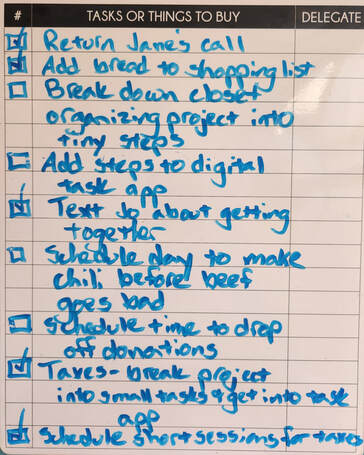 What does a parking lot have to do with organizing? Seemingly nothing, but, plenty. A world of pings and rings distracts us from our intended tasks. Let us not forget that incessant internal clatter, either. It is a miracle that we get anything done with all the noise.
For those with ADHD, it is even more challenging to ignore those pings, rings, and internal noise than for a neurotypical individual. According to what I have read online and in various books, we only have four “working memory” slots. Working memory is the section of our brain where we temporarily store information while we work with other information. For instance, to mentally add two large numbers, we must remember the first number, the second number, and also do the addition. I am grossly oversimplifying the concept, but the gist is that we do not have infinite working memory slots to hold multiple thoughts simultaneously. If we happen to pick up a ringing phone as we add those two numbers, the visual process and resulting thought could boot out one of the two numbers. Now you only remember the last number and the new thought. Goodbye, first number; back to the drawing board. Those with ADHD face a more considerable challenge with working memory. The same goes for aging neurotypicals. So, what are we to do if we have important tasks to complete, yet we repeatedly pull ourselves off-task, regardless of our best intentions? We can turn on our phones’ Do Not Disturb or Airplane Mode. We can mute audible or visual cues that alert us of unread emails. What about all those competing thoughts that pop up during every waking hour? I have read varying statistics stating we have anywhere from 6,200 to 10,000 thoughts on any given day. That is a lot of distraction deterring us from essential tasks! So how can we give ourselves a fighting chance of staying focused? We can use a “parking lot.” Years ago, I was in a multi-departmental meeting. There were complex issues to discuss, so naturally, many offshoots grew from the main discussion. I learned a great tactic in that meeting. The facilitator set up a large Post-It easel pad and labeled it “parking lot.” Anytime someone had a related question, concern, or idea that was not on the agenda, we wrote it on the “parking lot” so we did not forget it but could avoid going off-track. Someone later added the parking lot ideas to the next meeting’s agenda or captured it elsewhere to be addressed at a later date. At the time, I found it to be a novel concept. It can truly be helpful and you do not have to spend money to use this tool. Your parking lot could come in various forms:
You might notice that I did not include loose scraps of paper. Sometimes we do not have a choice, but I prefer getting ideas onto or into something that is not easily lost. When working at my computer, I enjoy using a dry-erase board. The board sits within arm’s reach so I can quickly capture the thought instead of impulsively going off-task. As a competing idea pops into consciousness, such as returning a text message, I write, “return Sarah’s text,” on my board instead of halting progress to text her right then and there. It can be a boon for getting things done when combined with a timer and Pomodoro sessions. For the Pomodoro, I set my timer for twenty-five or fifty minutes. When the timer rings, I take a short break. I can stretch, move around, and spend a few minutes attending to those other tasks or scheduling them into my calendar or digital task list. After my break, I can sit down for another focused Pomodoro session. I enjoy my dry-erase board because it has limited space to write. I force myself to calendar or input the task into my app then because I need a fresh slate to write down new ideas that inevitably pop up as I start my next Pomodoro. Additionally, I can avoid dealing with a daunting list of tasks to address at the end of the day when I am already tired. The biggest drawback to this tool is that it is too bulky to use on the go. So, one could employ a daily planner, so long as it contains blank space to write the ideas before they leave the working memory slot. We can use paper pads too. The benefit is that we can quickly capture the thought before it is forgotten. Its Achilles’ heel is that ripped-off papers might add more bulk to an existing pile of clutter. A digital planner or task app can work too. The benefit is that many of us typically have cell phones within arm’s reach, but for me personally, it has a significant drawback. As I age, I notice that fleeting thoughts flee my consciousness much faster than they used to, so I have to get the idea out of my head quickly. A lot could distract me on the way to getting the task into the app, thus knocking the thought out of my working memory until it randomly pops up again later on, usually at the wrong time to address it. To enter the task before the idea evaporates into thin air, I have to:
At any given time during these steps, another thought could race in and knock out the idea I wanted to remember. I am left holding my phone, ready to type, and frustratingly racking my brain for the thought that disappeared into the ether. So, rather than forcing myself to jump through those hoops, I skip the steps by more quickly grabbing my pen and dry-erase board. When I take a break, I schedule any tasks or add them to my digital task app. You can use digital voice assistants too. For instance, if you are working and remember that you need to buy milk tonight, you could launch Google Assistant on your digital device by saying, “OK, Google,” and then, “Remind me to get milk tonight at 7 pm.” The reminder will ring at the appropriate time instead of ruining your focus when you cannot go to the store. Whichever tool you use, a “parking lot” for dumping distracting thoughts can help keep us on track. We can then avoid the dreaded, “It’s 4 pm already! How did that happen? I was supposed to be done, but I just sat down and got started!” Getting those competing thoughts out of your working memory and into a receptacle outside of your memory gives you a fighting chance to get things done that truly matter. Have you ever done the Limbo? Do you remember an announcer asking, “How low can you go?” as someone moved the pole closer to the ground each successive round? I have long forgotten when I did the Limbo, but I still remember that man’s voice repeating the phrase. I was out of the game relatively quickly.
If you have ever seen or done the Limbo, you remember that the host always started with the pole at the highest position. Beginning with the lowest setting would have undoubtedly resulted in awkward silence. So, to recruit any willing participants, the announcer had to start with the Limbo stick at the highest position. As it is with the Limbo, so should it be with decluttering. Many individuals tell me that they started from the opposite direction before our collaboration began. That lowest pole setting might take the appearance of organizing an entire garage in one day. It could be attempting to review a lifetime of objects a few weeks before a large downsize. It may be trying to decrease possessions by 50% in one go, even though the last considerable reduction was excruciating and, thus, done years ago. You can set that pole high rather than starting with the Limbo pole at the lowest setting! Otherwise, your goal will look as appealing as a Limbo stick that rests an impossible 6 inches from the floor. That is not exactly enticing. You will likely sit the game out entirely because it is too difficult. So, what would a high and low Limbo pole look like? Let us look at how this could play out with a typical garage decluttering project. Starting with a painfully low Limbo stick: “I’m going to clean out the garage this weekend, once and for all!” That might be ok if you have practiced higher Limbo settings with more manageable decluttering projects. But if you have not decluttered in months, years, or even decades, your Limbo muscles are probably too weak to make it under that pole. When the weekend rolls around, you will likely take one look and walk away defeatedly. Starting with a seemingly ridiculously high Limbo stick: “I really want to clean out that garage because I’d love access to my holiday decorations again. I had so much fun decorating, and I miss it. But I haven’t decluttered in a while. Given how many items are in there, there’s no way I can declutter that entire garage this weekend. Plus, at least a few categories will be hard to cull. So let me list how I could start so small that it almost feels ridiculously easy.” Your list might look something like this:
Do some of these steps sound ridiculously simple? If so, good! So many individuals I work with are dubious when I suggest they start their solo decluttering sessions this way. “How can I possibly get anything done with such a short session?” Of course they have a valid point, but my counterpoint is that many people mention previous unsuccessful marathon decluttering sessions. If they got anything productive accomplished during that marathon, they were left so frustrated and exhausted that they never wanted to declutter again. Who can blame them? I generally avoid full-day sessions when I work on-site unless there is a hard deadline. Even then, we ensure they take more breaks than they might be used to. As you start, the goal is not to clear all the clutter. That would be the same as attending a party and expecting to Limbo at the lowest setting, even though you last did the Limbo decades ago. The initial goal is to anesthetize yourself to decluttering. You need to acclimate to the organizing process with a Limbo pole set so high that you can practically waltz under it, but it is slightly uncomfortable. Keep repeating that level until it feels much too easy, almost as easy as sitting the game out entirely. Then you can increase the length of your decluttering sessions, but only by a few minutes, which will be almost imperceptible to your internal clock. Keep repeating this process. You might argue that it will take forever to declutter in this fashion. It will be slower than spending twenty-four hours in one-weekend decluttering, but I would bet that rarely comes to fruition anyway. If it does, I will go out on a limb and say that the weekend left you feeling exhausted, frustrated by the lack of progress, and defeated. Why not try a new method that is not agonizing? There is very little risk in experimenting with this method. Clients who try this method report more success than trying longer sessions, especially when they are starting out. With enough practice, you could start to enjoy decluttering! I have witnessed this fun phenomenon with multiple clients. With their steady, realistic sessions, they resemble individuals who appear to effortlessly bend below the lowest Limbo pole that is mere inches from the floor! We are speeding toward the middle of the year; where did the time go? How are your New Year’s decluttering goals coming along? Have you fallen off the horse? Not to worry; you still have time to get back in the saddle. It is not too late.
If your horse never left the stable, you can take him out for a walk today; he might be chomping at the bit for some fresh air! 2023 still contains nearly six more months to complete that decluttering project. As a result of this year’s efforts, 2024 can be a year of more enjoyable and creative goals. Think of all the activities you could do with your free time once you handle the clutter. How can you realistically start today? I recommend beginning with such an infinitesimally small task that it almost feels painless. Here are some suggestions:
No matter where you start, the critical part is just to start. So many individuals get tripped up by attempting to find the perfect place to start. Then the stakes feel too high because the possibility of making a mistake feels too dangerous. Start imperfectly and start small. When all else fails, it might be time to enlist the help of a Certified Professional Organizer. I am only a phone call away! |
Archives
March 2024
Categories
All
|
 RSS Feed